Forests, mangroves and sand
DOI:
https://doi.org/10.15286/jps.135.1-2.107-114Keywords:
separating, dominating, speaking, persisting, metamorphosingAbstract
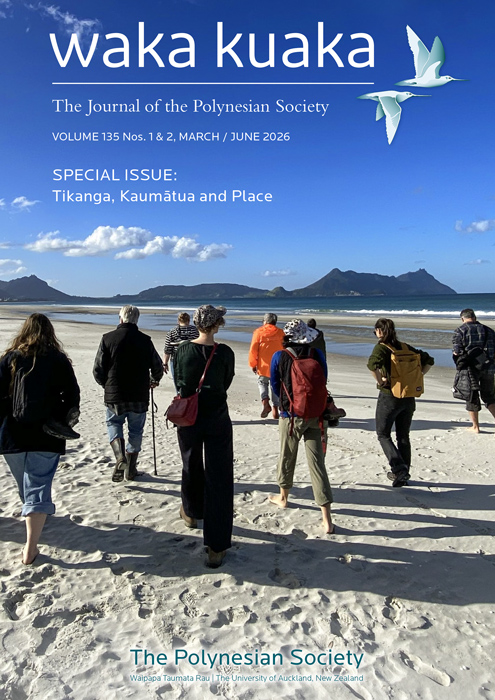
Through a voluntary Indigenous Māori–led conservation effort in a coastal community, the writers query the human-nature separation that persists in dominant governance policies and practices. In their place, we portray the Māori customary practice of kaitiakitanga (guardianship) as relational commons, to present an ontological and governance framework of loving, caring conservation of Earth Mother, Sky Father and their children.
Mere Kepa, Luana Pirihi, Patrick L. Hilton, Pania Moulton: Indigenous peoples’ collaboration is a radical cure. The leading Indigenous Māori discussion in Takahiwai and Ruakākā is now focused on working with the sea, not against it. This kind of radical thinking requires a voluntary partnership to giving land back to the sea. The collaborative philosophy demands consensus, not compulsion, and is the key to local sustainability. Luana, Patrick, Pania and Mere don’t have the authority to dictate anything. We do all our projects, such as our pest strategy, opposing industrial mining of the seabed, promoting the return of the land confiscated from the Indigenous people, and giving the land back to the sea, on a voluntary basis. Critically, the process of securing an agreement with industrialists, developers and elected representatives is lengthy—the final solutions are longer lasting because the radical cure is a nature-based coastal adaption voluntary partnership.
Additional Files
Published
How to Cite
Issue
Section
License
Copyright © 2025 by the Polynesian Society (Inc.)
Apart from any fair dealing for the purposes of private study, research, criticism, or review, as permitted under the Copyright Act, no part of this publication may be reproduced by any process without written permission.
Inquiries should be made to:
Dr Marcia Leenen-Young, Editor
The Polynesian Society
c/o School of Māori and Pacific Studies
The University of Auckland
Private Bag 92019, Auckland
New Zealand
email: m.leenen@auckland.ac.nz